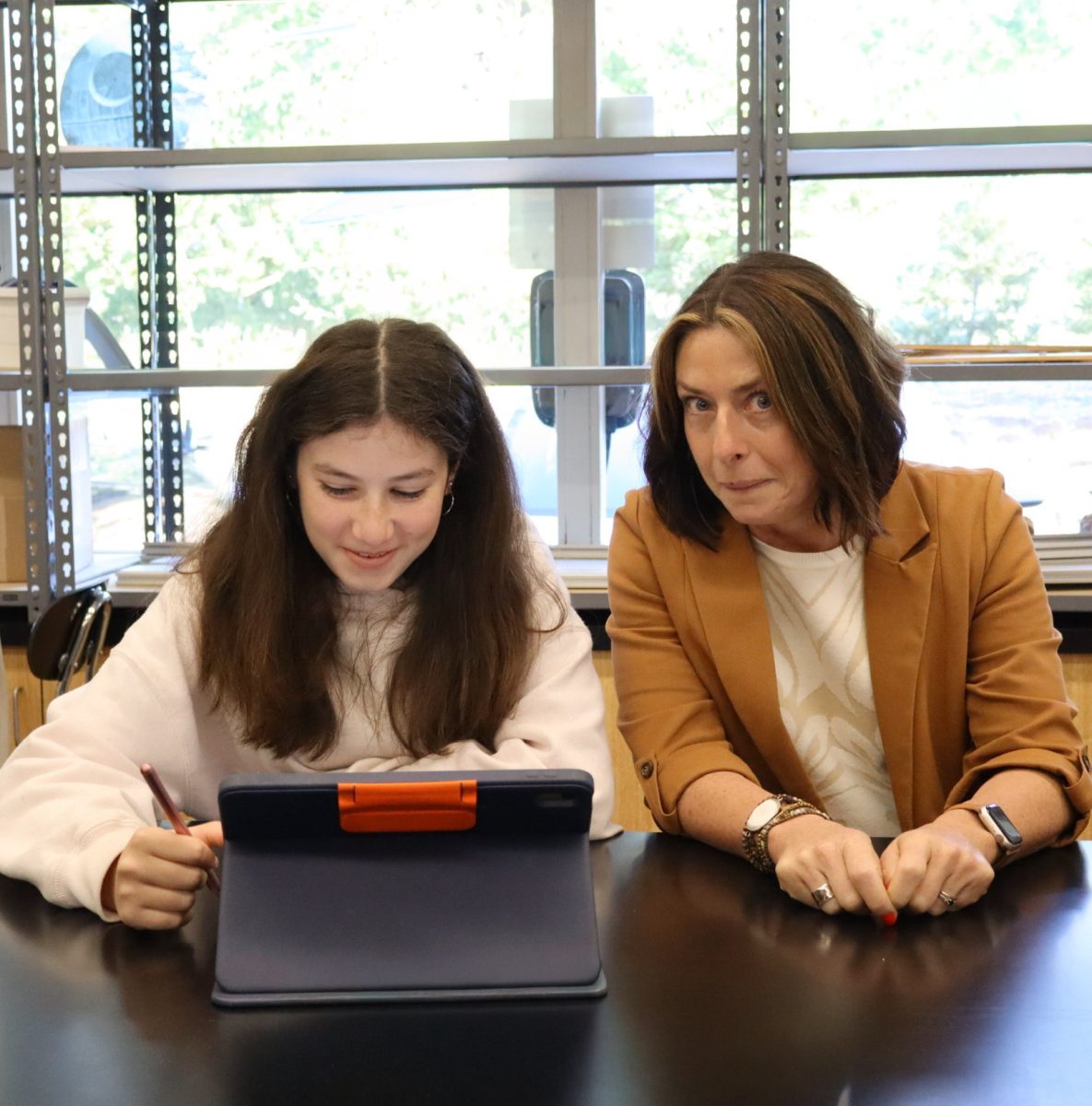
As the last bell of the day sounds, literature teacher Ellie Pojarska’s students submit their essays and absentmindedly stuff their belongings into half-zipped backpacks. From her seat, Pojarska watches the students leave until all that remains are their forgotten belongings. Hurriedly, Pojarska collects the abandoned items and places them into an inconspicuous bag labeled “HANDOUTS,” which she rushes to deliver to the front office.
In a secret after-school exclusive with The Perennial, Pojarska confessed the purpose of her inscrutable actions.
“For years, there has been an epidemic of students leaving items behind after class,” Pojarska said. “Pinewood has finally decided that it is the job of educators to help our community overcome this affliction.”
According to Pojarska, the stealing policy was outlined by the new Pinewood Pilferage Association, an organization which mandates that each teacher must meet a quota of 20 items per week.
All belongings are sent to the Lost and Found, which has received such a large influx of objects, often hundreds per day, that it must be cleared out bi-weekly.
Pojarska said stealing from her students is super easy for her.
“[Students] are always very focused when writing their essays, so it’s the perfect time to snag a few things from their backpacks and hide them at my desk,” Pojarska said. “But they never even notice. They’re SO disorganized. How do they expect to write an essay on ‘The Sound and the Fury’ without their annotations to study from?”
Spanish teacher Monica Llagaria, another supporter of the PPA, stated that taking student items may provide more learning opportunities.
“I’ll often take items from students’ backpacks when they’re in the bathroom,” Llagaria said. “But I don’t hide anything. When someone asks me what I’m doing, I explain myself. It’s not my fault that they aren’t good enough at Spanish to understand me.”
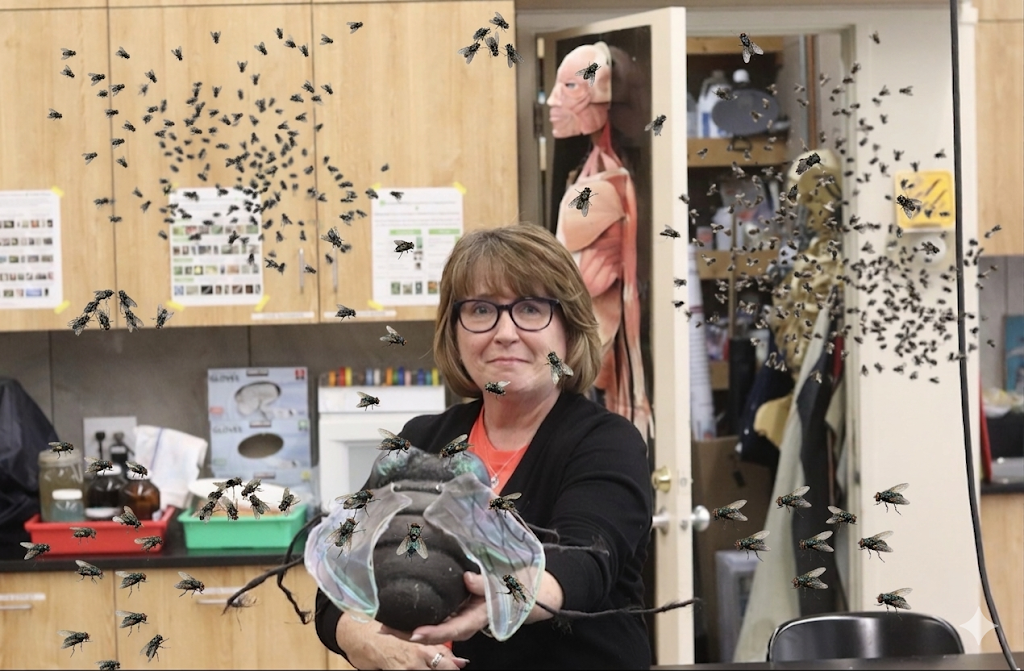
Similarly, science teacher Monica Ventrice believes that the PPA will create positive societal change by teaching students to be more responsible and by providing vital data on the behavioral patterns of sleep-deprived teenagers.
“Science is always encouraging us to pursue new discoveries,” Ventrice said. “For the past few weeks, I’ve been monitoring the percentage of students who forget their phones in the class phone basket when I don’t remind them. With this data, I’ll be able to calculate how much sleep students are actually getting, which is key to discovering the correlation between sleep and forgetfulness.”
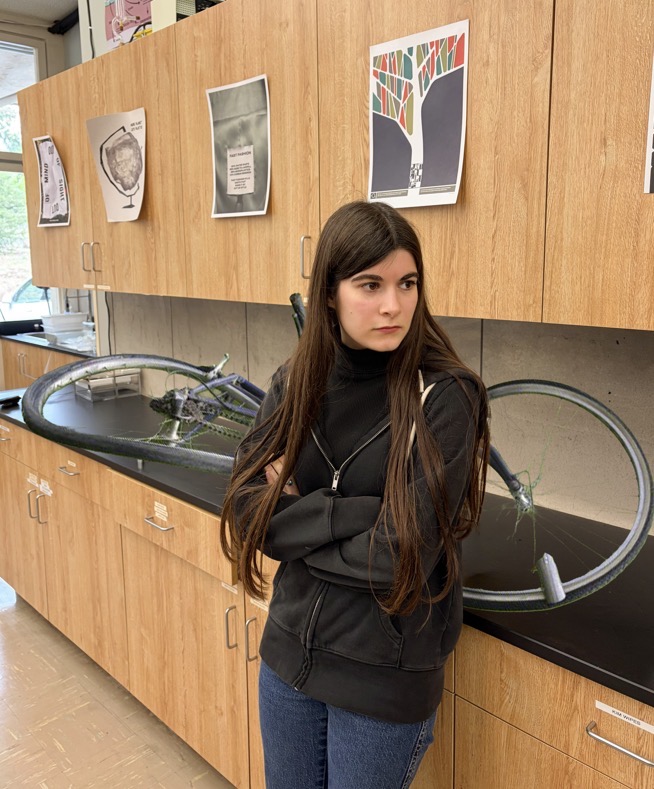
Ventrice has also been seen conspiring with lab assistants, such as senior and forgetful student Caitlin Yamaguchi, to create new behavioral experiments.
“In the future, I hope to investigate how students react when asked to take notes, only their iPads, pens, and pencils have mysteriously vanished,” 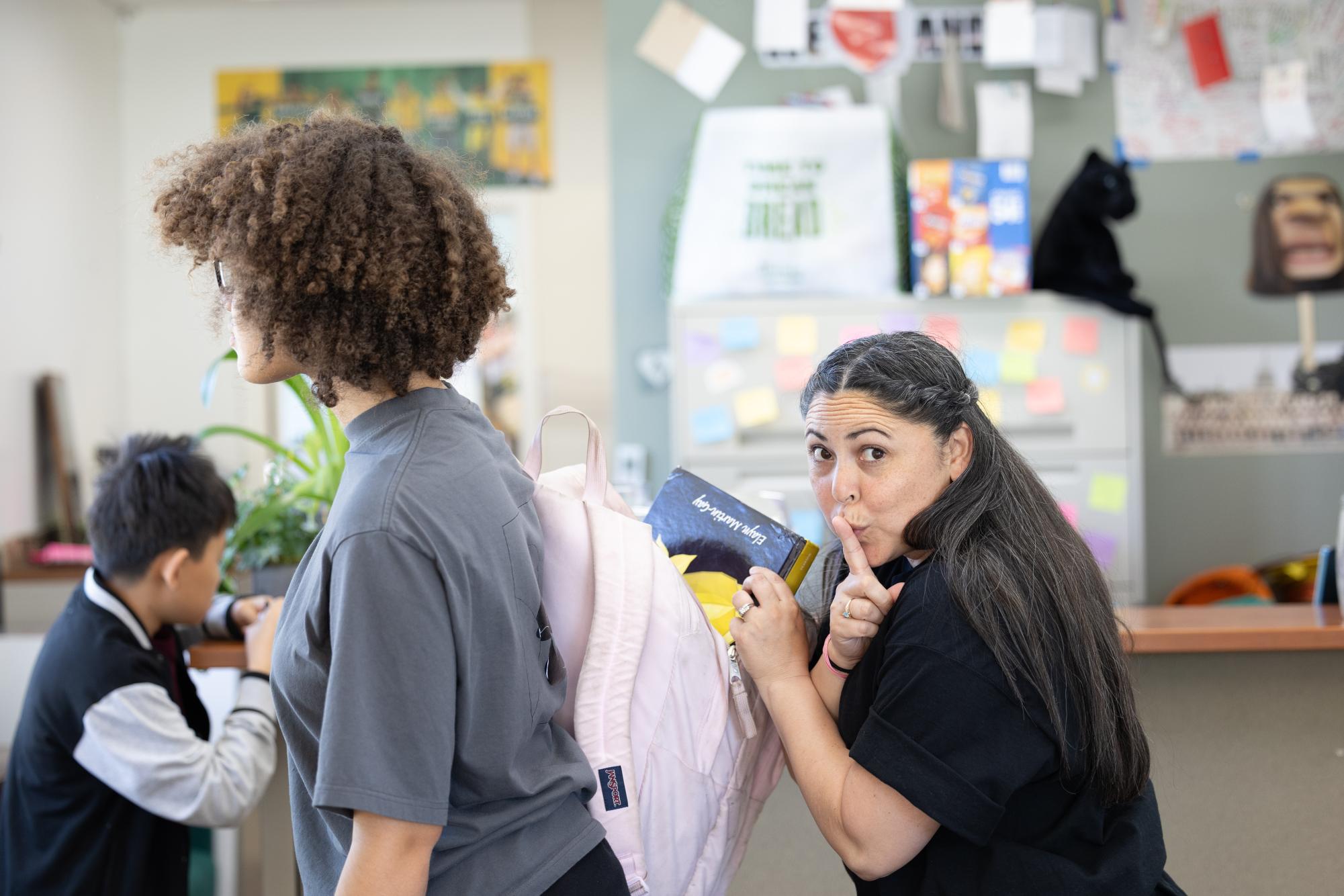 Ventrice said. “I hypothesize that students will experience a mental breakdown, realize the error of their ways, and vow to never be forgetful again. I can’t wait to test my hypothesis.”