If seeing a boa constrictor, a turtle, a leopard gecko, or a Madagascar hissing cockroach is on your bucket list, look no further! No need for a zoo; simply head into one of Pinewood’s science classrooms.
Over the years, Pinewood science teachers Elaina Tyson, Monica Ventrice, and Kim Hudson have cared for these pets, often inheriting them from past owners.
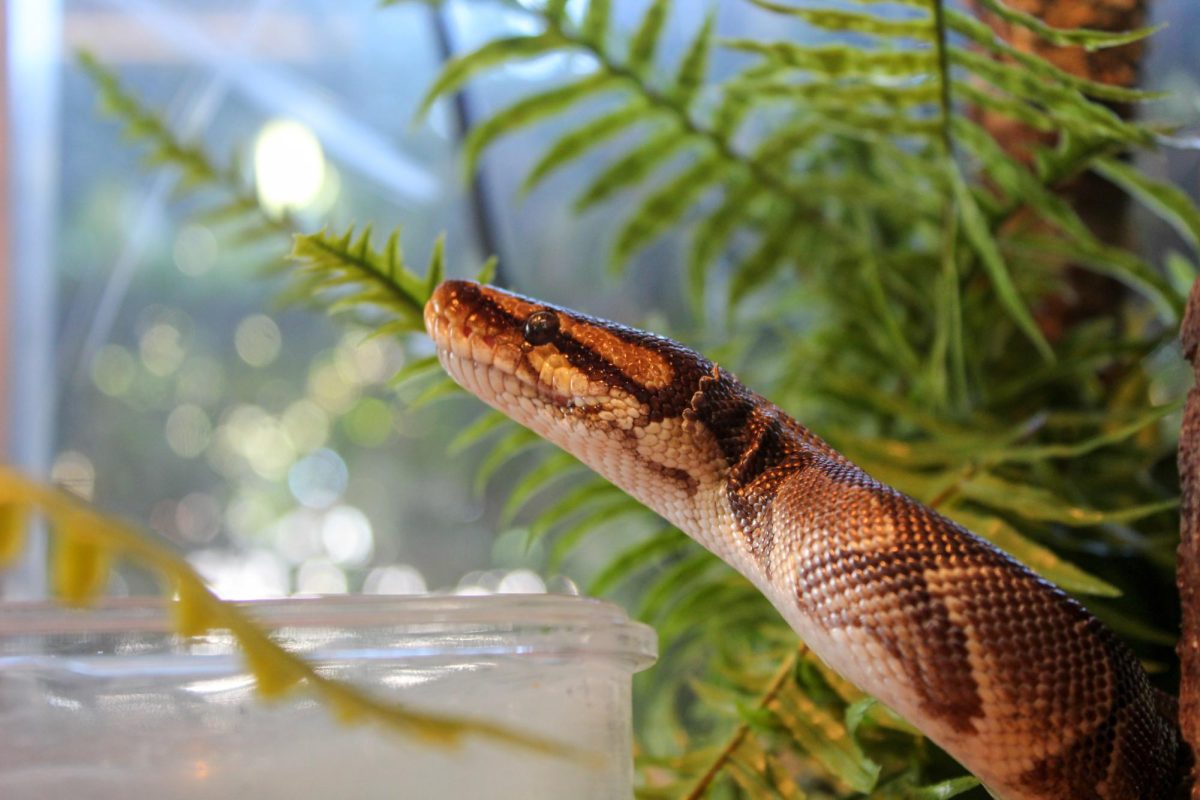
“One of my former colleagues [at Pinewood] had the snake at his house,” Tyson said. “He asked if I would like to have the snake for my classroom for the junior high and the summer session kids.”
While these classroom pets require much love and attention, Tyson and Hudson appreciate how relatively easy they are to care for.
“I definitely try to clean out all the bark at least twice a year before school starts and during winter break,” Tyson said. “[Snakes] don’t make messes the way a regular animal does.”
Hudson said that pets require daily checks to ensure they are active, healthy, and behaving normally.
“Creating the right environment for them and providing them with good food and lots of water or humidity helps keep them in good shape,” Hudson said.
Tyson’s snake, named Dodgy, typically eats a small rat only once a week, sometimes even going without eating for periods of time.
“He went as long as six months not eating once,” Tyson said. “Right now, he’s in the mood to move in the cage, but he’s not focusing on eating. This could be the time of year he would normally be hunting for a mate.”
Beyond being great pets for teachers to care for, these classroom animals also serve as learning tools for Pinewood students.
“[Classroom pets] are wonderful teaching opportunities since we are able to use our pets as examples for some of the topics and concepts we cover,” Hudson said. “They generate lots of questions and topics for discussion. Some students are very excited to interact with or hold them as well.”
Tyson agrees that these pets engage students with living organisms in ways they would normally only see in a zoo, building curiosity and sparking new observations.
“When he’s out moving around in his cage, they’re right up on it,” Tyson said. “Or we’re having class, and all of a sudden, they pause. Everyone’s like ‘Look at him!’”
Developing passion for nature is a major goal for Tyson and Hudson when considering having pets in the room.
“The curiosity and connection occur first, almost on the first day, and a sense of responsibility comes a bit later as students choose to interact [with] the pets,” Hudson said.
Together, these classroom pets turn ordinary classrooms into immersive experiences, enriching the learning of Pinewood students alike.