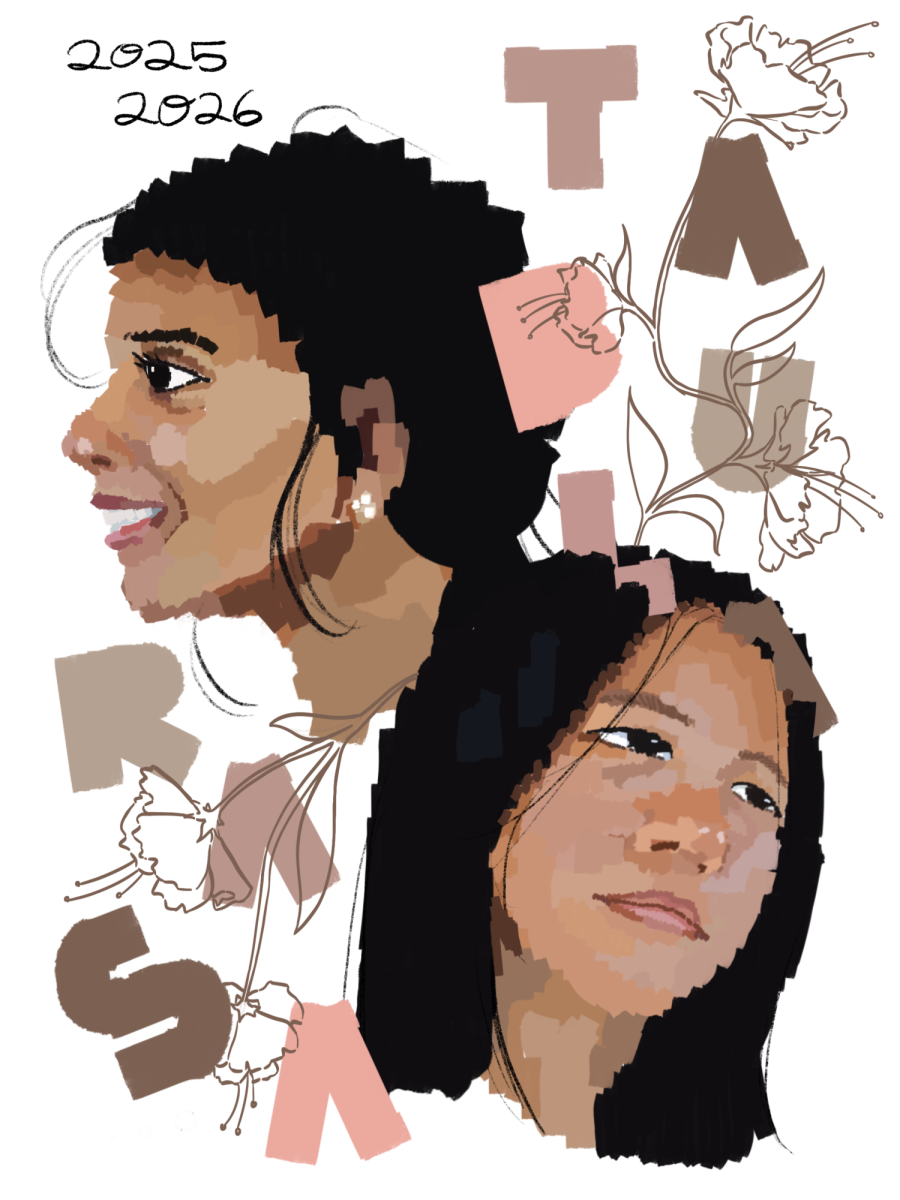

For senior Mia Randall, instead of winding down at home after school, her afternoons are spent at the barn, guiding horses through jumps and different courses.
Her mother, who also grew up riding horses, fostered Randall’s love of horseback riding. Randall started at six years old, although horseback riding was more of a hobby than sport for Randall until middle school, when she decided to take it more seriously and begin competing.
Randall competes in show jumping events at horse shows, where riders guide their horses through a series of jumps and obstacles in timed and judged rounds.
“When you’re a little kid, you go to the shows that have the smallest [obstacles], and it’s not that serious,” Randall said. “Then as you practice, you jump bigger, and the courses get more complex.”
Typically, Randall’s one-and-a-half-hour weekday practices include riding one or two of her horses, Jill and Kalia, and focusing on technical lessons such as flatwork, where she practices maintaining consistent rhythm, steering, and balance. On three-hour weekend practices, Randall focuses on jumping and practicing competition courses, a series of jumps following a set order and layout. Since jumping tends to be physically taxing on the horses, practices for it tend to be at the end of the week, giving the horses enough time to recover.
Training with the horses is a unique experience.
“When you’re working with an animal, every moment you’re on the horse is a moment to train,” Randall said. “[People] say it only takes one time to have a horse learn to do something wrong, and it takes three times for them to learn to do something right.”
Another aspect of horseback riding that is commonly misunderstood is the belief that the horse does all the work. Many people don’t see horseback riding as a very physical sport, but Randall points out that it not only works out muscles and body parts that aren’t often used, it also involves mental and strategic preparation.
On the mental side, Randall heavily emphasizes the importance of confidence and composure in the sport, especially in synergy with the horse.
“Horses can sense when you’re not confident,” Randall said. “If you’re not confident, your horse is not confident, and that can lead to you making [mistakes].”
Randall competed internationally, representing the USA, and jumps the highest level of show jumping: the Grand Prix height at around 1.45 meters.
As for the future, Randall plans to continue riding at a local barn near Haverford College. While she does not plan on maintaining the same level of competitiveness, Randall wishes to continue competing through college as a hobby.
“It’s a little bittersweet,” Randall said. “Riding has been so much of my life, but it’s also like turning a new page.”